COLLECTIVE Book Club | August 2026 Reflection

Dream Count by Chimamanda Ngozi Adichie
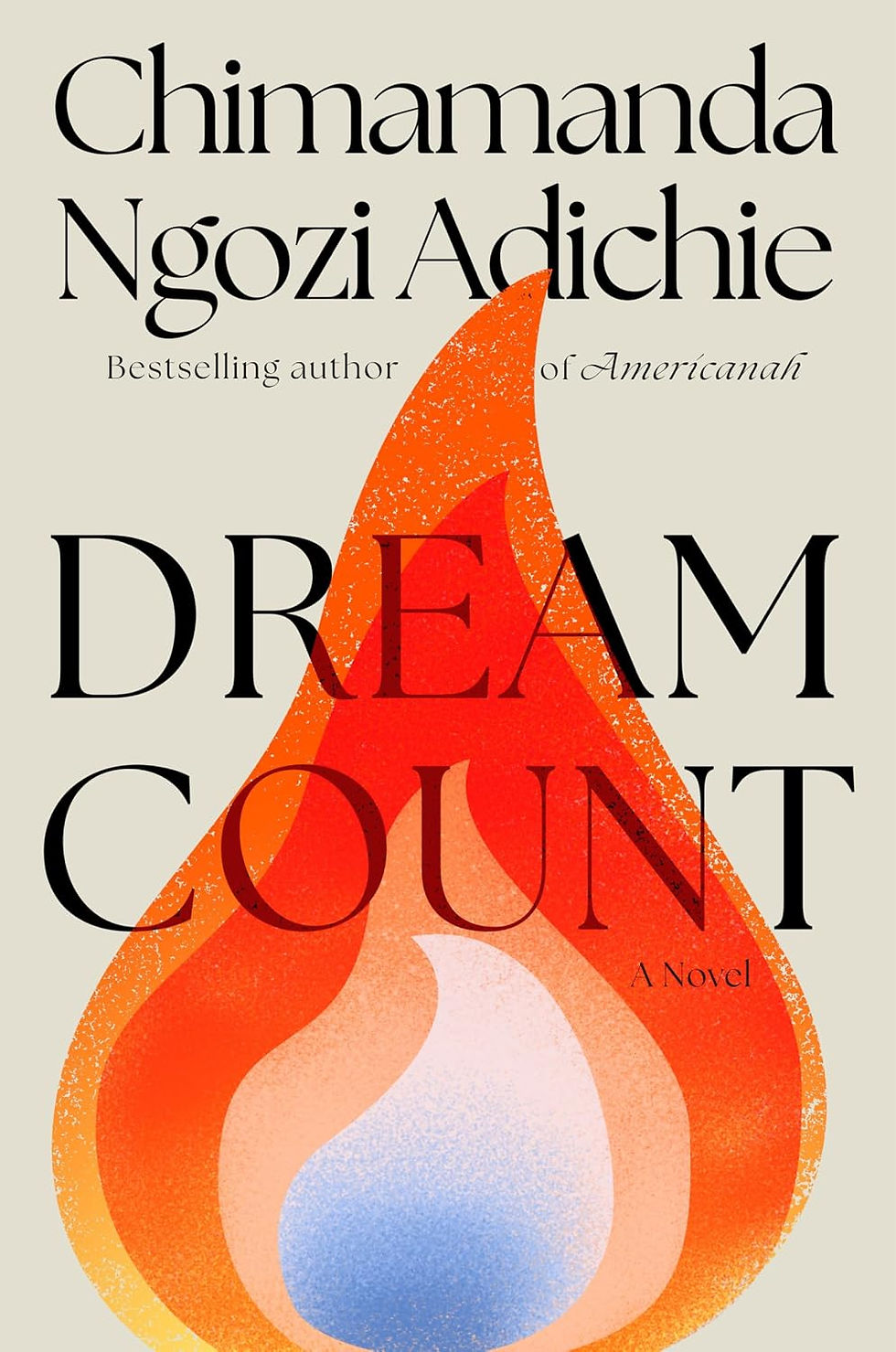
August’s COLLECTIVE Book Club took us into the lives of four African women navigating love, friendship, motherhood, ambition, disappointment, and the distance between the lives we imagine and the lives we actually live.
Set primarily in Maryland and Washington, D.C., during the 2020 COVID-19 pandemic, Dream Count by Chimamanda Ngozi Adichie follows four interconnected women: Chiamaka (Chia), Omelogor, Zikora, and Kadiatou (Kadi). Through their individual stories, the novel moves between the United States and Nigeria, with Holland, Mexico, Guinea, and other places appearing through memories of relationships and lives lived before the world shut down.
What connects these women is not simply friendship or proximity. Each is, in some way, taking stock of her life. And despite significant differences in wealth, education, career, immigration status, and opportunity, each woman is confronting some version of the same question: Is this the life I thought I would have?
The Lives We Imagine
Chiamaka, or Chia for short, is a wealthy Nigerian travel writer living alone in Maryland when COVID brings the world to a standstill. With nowhere to travel and few distractions from her own thoughts, she begins revisiting the men she has loved and the relationships that did not become what she hoped they would.
Darnell. Chuka. Luuk. An Englishman.
Different men, different relationships, but each leaves Chia considering what she wanted from love and why it remained so difficult to find. When the mother of a friend dies from COVID, the uncertainty of the pandemic becomes even more personal, adding another layer to Chia’s questions about time, loneliness, and the life she has built.
Chia's cousin, Omelogor, has achieved a different kind of success. Once a high-flying banker in Nigeria, she leaves finance to pursue graduate study in the United States, focusing her academic work on internet pornography. Yet professional accomplishment does not bring certainty either. Eventually returning to Nigeria disillusioned, she spends the Abuja lockdown reflecting on her own fleeting relationships and unmet expectations.
Then there is Zikora, Chia’s friend and a successful lawyer whose carefully constructed life changes when she becomes pregnant.
Her partner, Kwame, disappears when she tells him. He eventually blocks her number, leaving Zikora to experience pregnancy and childbirth without the man she believed would be beside her. Instead, it is her mother who flies in from Nigeria and becomes her source of "support." Their experience together during Zikora’s labor begins to reshape a mother-daughter relationship that had long carried its own complications.
Again and again, Adichie gives us women who appear accomplished from the outside while privately confronting disappointment, uncertainty, and longing.
And Then There Is Kadi
Kadiatou (Kadi) occupies a very different place in this group.
She is Chia’s housekeeper, a Guinean immigrant and devoted mother who has survived loss, a failed early marriage, immigration, financial insecurity, and the imprisonment of Amadou, her childhood love and the man with whom she came to America.
Unlike the other women, Kadi does not have wealth or professional status to cushion her from instability. She has built her life quietly around work, survival, and her daughter.
Then, while cleaning a hotel room, she is sexually assaulted by a wealthy and powerful hotel guest.
Kadi reports the assault, but the legal process gradually turns its scrutiny toward her. Her history, choices, inconsistencies, and credibility become part of the case until it can feel as though Kadi herself is the one being investigated.
I was especially intrigued to learn that Kadi’s story is loosely based on real-life events. Adichie has discussed the inspiration she drew from Nafissatou Diallo, the Guinean hotel housekeeper who accused Dominique Strauss-Kahn, then head of the International Monetary Fund, of sexual assault in New York in 2011. Kadi is a fictional character with a life and history created by Adichie, but the parallels to Diallo’s case are deliberate.
Knowing that made Kadi’s storyline even more compelling for me because it raises a question that extends far beyond one fictional woman:
What happens when a woman without power accuses a man who has plenty of it?
Dream Count shows us how, especially in America, how quickly the answer can depend on money, class, immigration status, credibility, and who society has already decided is worthy of being believed.
Reading COVID From a Distance
I was also surprised by how much I appreciated the COVID setting.
There was a time when I had little interest in revisiting the pandemic through fiction. We had lived through the uncertainty, isolation, illness, death, school closures, masks, distancing, disrupted routines, and constant anxiety. I did not particularly need to experience it again through a novel.
But now, with some distance from those years, I could appreciate the storyline without being overly triggered by the trauma of the COVID era.
The pandemic becomes more than a historical backdrop. It forces these women to be still.
For Chia especially, lockdown removes much of the movement and distraction that normally fill her life. She is a travel writer who cannot travel, alone with memories of old relationships and questions about the future.
And perhaps that is one reason the setting works.
Many of us remember that strange interruption of ordinary life and the questions it created about work, relationships, health, family, priorities, and what actually mattered.
A COLLECTIVE Reflection
One of the most interesting tensions in Dream Count is the contrast between what these women possess and how fulfilled they actually feel.
Chia has money and freedom.
Omelogor has intelligence, confidence, and professional success.
Zikora has education and an impressive career.
Kadi has the least material privilege of them all. Yet by the end, it is Kadi who seems closest to understanding what is enough.
When prosecutors ultimately drop the criminal charges against the man she accused, Chia, Zikora, and Omelogor follow the case with anger and frustration. Zikora and Omelogor, in particular, recognize the injustice of what has happened. But Kadi’s response is different. She turns toward her daughter.
There is something both unsettling and beautiful about that choice. It does not make the injustice acceptable, nor does it suggest that women should simply accept what institutions fail to make right. Instead, Kadi seems unwilling to allow the outcome of the case to determine the meaning of the rest of her life.
And perhaps that is where Dream Count connects most deeply with the idea of aafiyah — wholeness.
Wholeness is not necessarily having everything.
It is not wealth, professional success, the perfect relationship, motherhood, independence, or any single marker we might use to measure a successful life.
The women who appear to have the most are still searching.
The woman who has endured perhaps the most finds joy in what remains.
That contrast stayed with me.
Closing Reflection
The title Dream Count invites us to take inventory.
What did you once imagine your life would look like?
Which dreams came true? Which changed? Which did you have to release? Which did you discover were never really yours? And which are you still carrying?
There is a temptation to measure our lives against an imagined version of what they were supposed to become ... a certain career, marriage, children, financial security, travel, achievement, or simply reaching a particular place by a particular age.
But perhaps the more meaningful question is not whether life unfolded according to the dream. Perhaps it is whether we can recognize aafiyah within the life we have.
Kadi’s ending reminded me that fulfillment and success are not always found where we expect them to be. Sometimes the person with fewer choices understands more clearly what she values. Sometimes what looks like an incomplete life from the outside feels remarkably full to the person living it.
And sometimes, counting our dreams requires us to also count what is already here, what survived, what grew, what changed, and what still gives us reason to be grateful.
So, as we close this month’s COLLECTIVE reflection, I’ll leave us with this:
If you stopped measuring your life against the one you once imagined, what in the life you have right now might you see differently?
To join the COLLECTIVE Book Club, send a text message (WhatsApp preferred) to (202) 770-9119 or email Contact@AafiyahCollective.com. We would love to have you in the room.


Comments